top of page
  • Writer: Annie Mason
    Annie Mason
  • 6 min read

ree
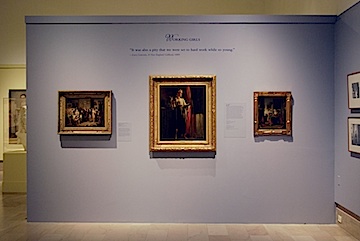
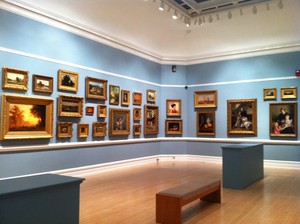
George Walter Vincent Smith Museum of Art, Springfield, MA

This is a list of the museums where I have worked. All have different perspectives, art types, and periods of art. All of these experiences are vividly part of my study in art history; they have me reflecting on the past and how far back these experiences have linked me to my love of art.


1. George Walter Vincent Smith Museum of Art


This was the museum where I interned as a student in the Department of Art History at the University of Massachusetts (UMASS-Amherst). This art museum holds the eclectic collections of George Walter Vincent Smith (1832-1923) and his wife, Belle Townsley Smith (1845-1928), in an Italian palazzo-style building established in 1896. It's a museum that could speak to us if it could...and maybe it does Haunted Springfield.


One of my fellow graduate colleagues, Janet Gelman, was the Education Curator. We immediately bonded as we shared our affinity for children's art education: she was in the museum setting, and I had an elementary art teacher background. We had long talks over coffee or sandwiches. Inevitably, the children's theme slipped into what Professors had thrown at us. Graduate school is a world unto itself. Long papers, research, sleepless nights, critiques that didn't go so well. Both of us were old enough to take things in stride and move on. The younger students admired our "c'est la vie" attitude regarding our studies.


It is part of "The Quadrangle" in Springfield, Massachusetts.


Among the varied themes of the George Walter Vincent Smith Museum are:

  • Vast holdings include one of the largest collections of Chinese cloisonné outside of Asia.

  • Japanese Arms and Armor

  • Tiffany Stained Glass windows

  • 19th-century Middle Eastern carpets

  • Hasbro Games Art Discovery Center for children's classes

  • American Paintings Salon


ree
Mr Mrs. George Walter Vincent Smith by Thomas Waterman Wood

What a blessing to have had this experience at a museum near where I was born. This building is a museum's museum: the eighteenth-century ambiance, the long halls and grand paintings upon paintings, and the eyes of antiquity all around = my definition of heaven.


2. The Porter-Phelps-Huntington House Museum


ree

I worked at this museum while I was a graduate student at UMASS-Amherst. My role was curator and docent, and I loved this job. I lived just down the road in Hadley, Massachusetts, and the director, Susan Lisk, became a close friend when I worked there.


What a history this house has. For a detailed background, consider Forty-Acres: The Story of the Bishop Huntington House


This unique museum has a magnificent history. As a docent, I often toured a small party through the house, and the "one-hour tour" became two.

This well-preserved 18th-century house was continuously occupied by a single family in 1752 until the death of Dr. James Lincoln Huntington, the museum's founder. The house contains many interesting items belonging to the family and preserved for over 300 years. The Porter-Phelps-Huntington papers are now preserved at Amherst College Archives and Special Collections.


My memories of this museum are distinct since so many families occupied the house. There are also references to supernatural events dating back to the Huntington years. You can check some of the tales here: "Ghost" Stories.


I had my encounter. I was doing some curator tasks in the Director's home. Back in the day of electric typewriters, when errors needed to be changed in the text, I found myself putting back a pencil that rolled off the desk. And then, again. And then, again. I started to freak out because I sensed that "someone" was in the room. It was eerie.


Suffice it to say this is a beautiful museum, and if you are ever in the Hadley, MA, area, it's worth planning a tour. TripAdvisor


3. Yale Center for British Art


ree
the modern Yale Center for British Art across from Yale Art Gallery

How could I have been so lucky to land a position at this beautiful museum? Well, luck and a heads-up from a fellow student in the Art History department. She graduated a semester before I did and had been in the Photograph Cataloguer role at the BAC (British Art Center) but was leaving for another museum. I applied for this position and interviewed with the head of the Yale Photograph Archive department, author Anne-Marie Logan. Soon I was headed to New Haven, CT to work at this prestigious museum.


The internationally acclaimed American architect Louis I. Kahn (1901–1974) designed it to house Paul Mellon's (Yale College, Class of 1929; 1907–1999) extraordinary gift to Yale University. It was the first museum in the United States to incorporate retail shops in its design.


ree
The hall area between the Photograph Archives and the Prints Collection

The geometrical four-floor interior is designed around two interior courtyards and comprises a restrained palette of natural materials, including travertine marble, white oak, concrete, and Belgian linen. Kahn succeeded in creating intimate galleries where one can view objects in diffused natural light. He wanted to allow in as much daylight as possible, with artificial illumination used only on dark days or in the evening. The building’s design, materials, and skylit rooms combine to provide an environment for the works of art that is simple and dignified.


4. The Pardee-Morris House

Again, one thing leads to another in my life. After I got the job at Yale, I needed a place to live. It turns out that Susan Lisk of the Porter-Phelps-Huntington House (see above) had a sister, Linda, who lived in New Haven, Connecticut, and she spent a whole day with me checking the rentals in the city. I found a lovely place with daily public transportation to downtown. Linda also suggested that I might want to docent at this house museum for a little extra income. Who would have thought it? Two sisters who have been part of my museum adventures.


One of New Haven’s oldest structures, this historic property descended in one family through seven generations.


ree

This beautiful house, dating to 1680, is a rare example of a stone ender. The ell was added around 1767. On July 5, 1779, during the Revolutionary War, the British raided New Haven and burned the house. Using the surviving stone and timbers, Captain Amos Morris rebuilt the home the following year.


In 1915, William Pardee bought and restored the house,


ree

In 1918, William S. Pardee, a descendant of the Morris family, bequeathed the property to the New Haven Colony Historical Society, which is today known as the New Haven Museum.


The oldest portions of the house are believed to date to the late 17th century, probably during the lifetime of Thomas Morris, the first colonial grantee of land in this area, or one of his sons. It was partially burned by the British in 1779. It remained with the Morris family until 1915, when it was sold to William Pardee. He briefly occupied the house and willed it to the historical society upon his death a few years later, along with an endowment for its care.


My time here was primarily on weekends. I was the only docent and had to open and close the property during the tourist season. This, too, was a property with a lot of history and a fun building to present to curious visitors. During this period (the late 1980s), the future of this museum was risky and uncertain.


ree

How happy I am to see that the New Haven Museum bought the structure and now has summer concerts on the lawn. This has brought new life to the museum and joy to the visitors.


5. Kenmore Foundation


I traveled to Virginia to see my sister during my years at Yale. She quietly planned a gathering at her home and invited a few friends, including an invitation to the bachelor who had built a house across the street. Soon after, this man asked me to marry him, and I said, "Yes."


I moved to Virginia in 1989 and have lived there since then. Not wanting to give up on my love of museums, I learned about Kenmore Plantation in Fredericksburg, Virginia.


ree

My role began at Kenmore as a docent. I loved it! I have an affinity for welcoming visitors and telling the stories of the objects and people who lived there. The other volunteers, most older than I, were helpful and guided my early start. Not many months later, I began to work with the Education Director, Stacia Gregory Norman, and I helped catalog the photographs and papers. In my second year, W. Vernon Edenfield took notice and offered me the position of Education Assistant.


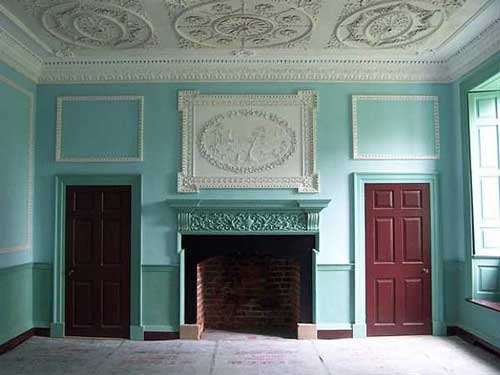
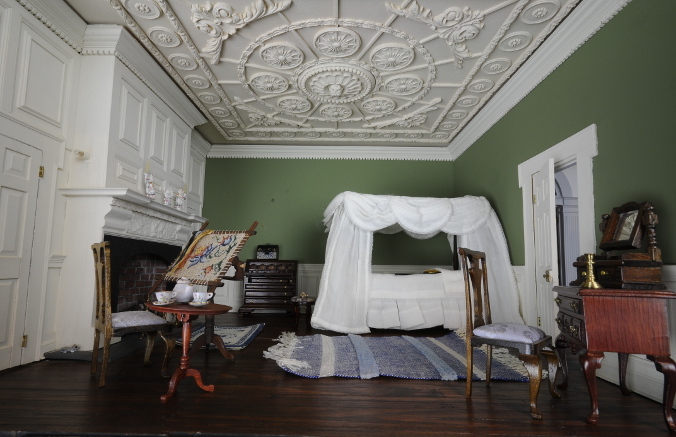
Kenmore is the Fredericksburg home of Revolutionary War patriot Col. Fielding Lewis and his wife, Elizabeth "Betty" Washington, George Washington's only sister. In Kenmore's spacious interior, the plaster designs on the 12-foot-high ceilings combine baroque, neoclassical, and rococo elements. Use arrows to slide:


My days at these museums are long gone, but they are not forgotten. I gained knowledge, insight, and history and have met amazing people. I am grateful for the opportunities that these experiences provided.


For those with the notion that museums are places for the "haunting," here are some books:


Pin it, please, or comment below this post.


ree

ree


ree

Meet the Artist. The place where I introduce YOU to an artist through a virtual interview. Our featured artist is Belette Le Pink. *Note The images in this post link to Belette's product shops.


Belette Le Pink

Madrid, Spain


  • Who are you, and what is your background?

Hi, this is Leticia, the person behind Belette Le Pink. Based in Madrid, Spain, I´m 43.

I come from a humble family with no relation to the arts or cultural aspirations, but from them, I learned to face life´s adversities through hard work and I don´t give up.


I studied Art and Illustration in Art School, but I am mostly a self-taught artist inspired by wildlife and daily life.

ree


I started doodling when I was 4, just before I started writing. I used to copy cartoons I watched on TV (Hanna Barbera, Anime, Disney…) because I will always be fascinated by animation.


Because I grew up in a small city, my contact with nature was truly wildlife documentaries and the small parks and forests on the edge of town. For some reason, I have always felt connected with animals since my childhood, and I enjoyed illustrating hunting scenes of eagles, wolves, and lions… and reading Jack London´s novels. I wrote some books I illustrated by myself about doggy adventures and this kind. I was a lucky girl living in the wonderful '80s, a really creative and positive era.


My dream was to be a wildlife filmmaker and visit faraway places with my camera and sketchbook, or a Disney animator, creating wonderful characters more than a famous “artist”.

It is because of this I planned to study Biology until my 14th birthday when a neighbor of mine, who had been a painter in her youth, gave me an oil painting set and I started to paint more seriously.


I was inspired by the art of the Dutch artist Rien Poorvliet, famous for his illustrated books on wildlife and the Gnomes. I also liked classics Dutch like Vermeer (I love the wet on wet oil painting) Goya, Renoir, Pre-Raphaelites, Klimt, and avant-garde artists like Franz Marc,

Chagall, and whatever artist or illustrator, good or bad has a personal identity.


I started my illustration studies preparing to become a cartoonist or animator, and in the 90s, many animation studios were available in Spain. Still, due to personal circumstances, I needed a regular job, and I had to pause my artistic career for many years, leaving the art apart for free time and occasional commissions.

Meanwhile, I participated in many Local and National Exhibitions, Shows, interviews, and contests.

I have never been a portraits-or-painting artist only because I love to catch the movement, and maybe it is because of this that my sketches are always unfinished, leaving the imagination close to the lines. I identify more with audiovisual media. I have also studied music for many years, and music broadened my understanding of life, feelings, and the arts.

In 2010 I resumed my artistic studies learning Graphic Design, Advertising, and audiovisuals (examples).

And it was in 2017 when I decided to leave my regular job to try an artist career again, and this is how Belette was born.


  • What is your favorite medium?

Although I now use mainly digital painting, my favorite mediums are wet-on-wet oil painting and crayons, collage, and mixed media. I love the fresh watercolor style, ink sketches, and all the techniques with the expontaneous look.

I intend to introduce the traditional art concept and effects into my digital art to make it warmer and more organic.


ree
Otters of the World pattern in grey Framed Mini Art Print


  • Has your practice changed over time?

This question is related to what we have talked about previously. I started drawing with what I had available: crayons, markers, gouaches, pens, and colored pencils when I was a child, and with watercolors, inks, and oils as a teenager.

In the early 2000s, I discovered the art of Annette Messager and her installations, and I was fascinated by exhibition art and the tridimensional possibilities. I realized that two dimensions were not enough for me. In addition, I discovered digital art possibilities and learned to use motion graphic tools and animation. I don´t believe the different types of art compete; they are complementary, and each medium has a kind of magic, utility, and expression. It's experimenting with them; our creativity does the rest.


  • What do you most enjoy painting?

Well, this is obvious (laughs) animals and wildlife.


ree


  • What is the strongest memory of your childhood?

I have many childhood memories, but they all seem so far away, as if they weren't mine. Nothing in particular, but maybe one of them was my tonsil operation when I was 3-4 years old. I remember everything went dark, and then I was eating ice cream.


ree
Visit RedBubble and check this as a sticker!


  • What jobs have you done other than being an artist?

Like many of us, I have had many jobs not related to art. I have been a shopping assistant in a printer shop, a food store, and a store restocker. I also worked as a manufacturer in factories and warehouses. I was mostly a telephone assistant in a call center in many areas like the help desk or searching for people with debts. I learned so much about people and met many different people from different nationalities there. I made many friends, no matter the kind of job, many of whom have had similar situations in life or worse. No matter what you studied or what you wanted to be, we all are in the same boat.


  • What has been your favorite response to your work?

I am most pleased when someone tells me that they feel motivated to create art, and my art, my animals, or my words inspire them.


ree
DESIGNBYHÜMANS Steal Your Heart Mon Amour


  • Professionally, what is your goal? What´s your best advice for someone wanting to start as an artist?

I would like my illustration art to somehow impact people's consciousness and spread the love for animals, wildlife, nature, and the environment. Humans are part of nature, too, even when it seems we refuse to accept that we are just one more species on this planet. I am so happy when somebody writes a comment about how they enjoy discovering new animals and being able to contribute in some way to reflect on respect for nature, the environment, and humanity itself through my small actions. Small steps matter; baby steps are the beginning of big changes. I know it's a very hackneyed saying, but it works: I am a small artist now and willing to walk the needed. This is my recommendation for those who want to be an artist or whatever they want: success is never guaranteed, but I believe it is better to accept the frustration of not being a big artist or having too high expectations than to regret not having even tried. Just do it; only time will tell.


ree
Click for a link an acrylic tray | Society6


ree
Paradise before the fire (SGHN) Sticker | Society6


ree
The Hunter - poster on Displate


Thank you so much, Belette!


Readers, you can find Belette at lots of shops, and you can check them from this site:


Be sure to check the Print-on-Demand sites for many products with Belette's wonderful designs: Society6 or Redbubble or Zazzle (select your language).


Social Media:


While you're shopping, why not buy Belette a cup of coffee? Click the icon here: ⬇️

ree


Visit all the MEET THE ARTIST posts


Pin it, Please! Comment below this post.


ree


  • Writer: Annie Mason
    Annie Mason
  • 2 min read

ree

An artist doesn't work out of a vacuum. My ideas come from things that I see or dream. Yet, the ideas need to connect to the technique. The creative process has been studied by many, for example, The Five Stages of the Creative Process. I don't dwell on this, but I am sure I go through each stage. I don't analyze my process. I know that I do prep work, an idea "incubates," I do have "aha" moments, I evaluate what I'm going to do and what I need for materials, and I carry out a physical process, combining materials, technique, visuals, and the final result.


I don't often head for the myriad of art books that I have. More often than not, I have the images in my head before I start my work. A sketch, some pencil work, and I am off and running. I often work from my photographs, even if I have the objects in front of me (a still life). But art books do charge my batteries. Flipping through pages sometimes is enough to give me ideas for how to get a certain effect.


So here is my list:


ree

I don't draw/or paint many people. Why is this my number 1? Well, for me, it's a desire to know figure drawing. As an art student at the Universidad de las Americas in Mexico, we had to draw every major muscle in the body and then overlay the skin to draw that body part. Whew. I still hear the professor: "The deltoid muscle raises the arm to a horizontal plane."


These books vary by level and are available in Paperback, Kindle, or Hardcover.


By Carrie Stuart Parks and Rick Parks. Paperback.


By Mark Millenbrink. Available in Kindle and Paperback.


By Caroline Linscott. Assorted lessons. Paperback.


By Gordon MacKenzie. Hardcover. Intermediate.


By Claudia Nice. Kindle, Hardcover, and Paperback.


By Emma Lefebre - Paperback, Kindle, and Hardcover.


By Rosalie Haizlet. Paperback.


By Saunna Russell. Paperback.


By Marina Bakasova. Paperback.


By Peggy Dean. Paperback.


By Ann Mortimer. Paperback. 18 Books.


Pin it, please. Comment below.


ree

ree


bottom of page